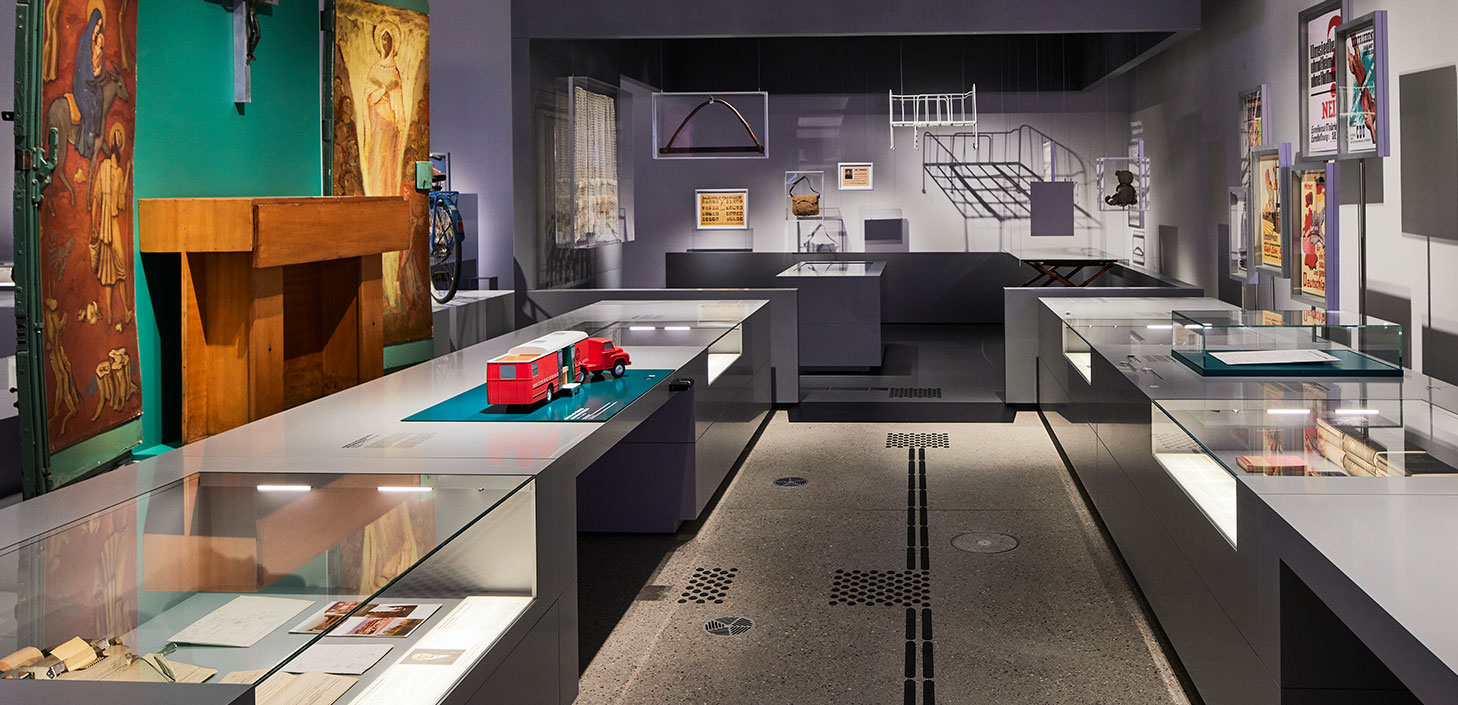
Creative and functional structures for a documentation centre
What were the challenges, and how did we come up with a solution?
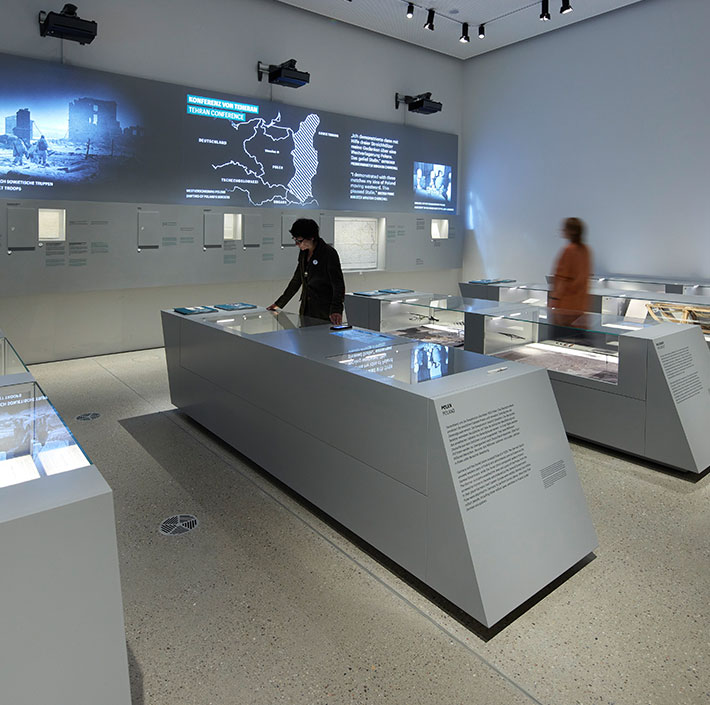
This documentation centre project posed significant challenges in terms of design and logistics, mainly due to the large-format and extremely heavy solid surface panels involved. The ‘Heimatstube’ local history feature in particular – at eight metres long and four metres high – required the precise assembly of around 60 solid individual components. The substantial weight and dimensions of these parts meant that transporting and installing them would not be straightforward
The solution lay in a modular, digitally designed structure that the made heavy components transportable while still achieving a seamless, monolithic effect. With the help of CNC machining, concealed joints and a precisely coordinated assembly process, the heavy panels could be handled safely and slotted together perfectly. This project involved producing 900 square metres of solid surface panels within six months.
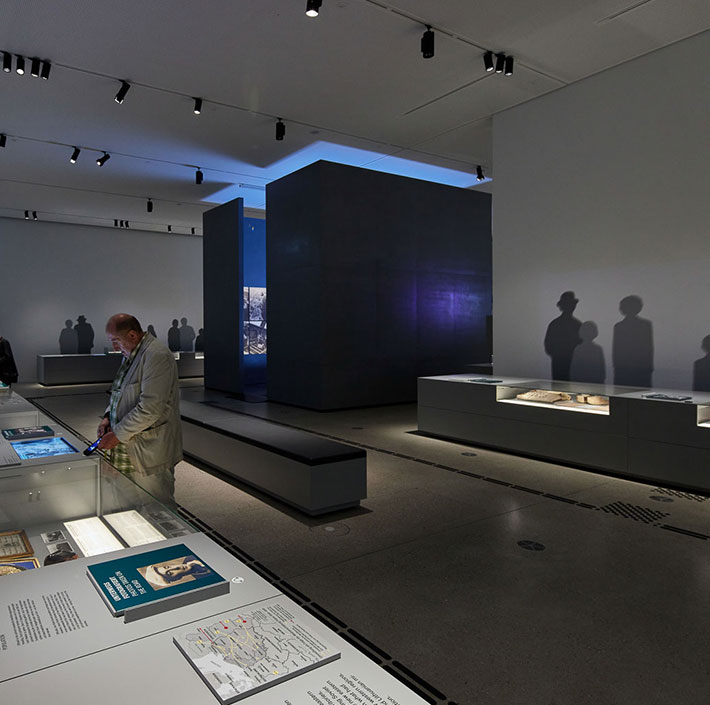
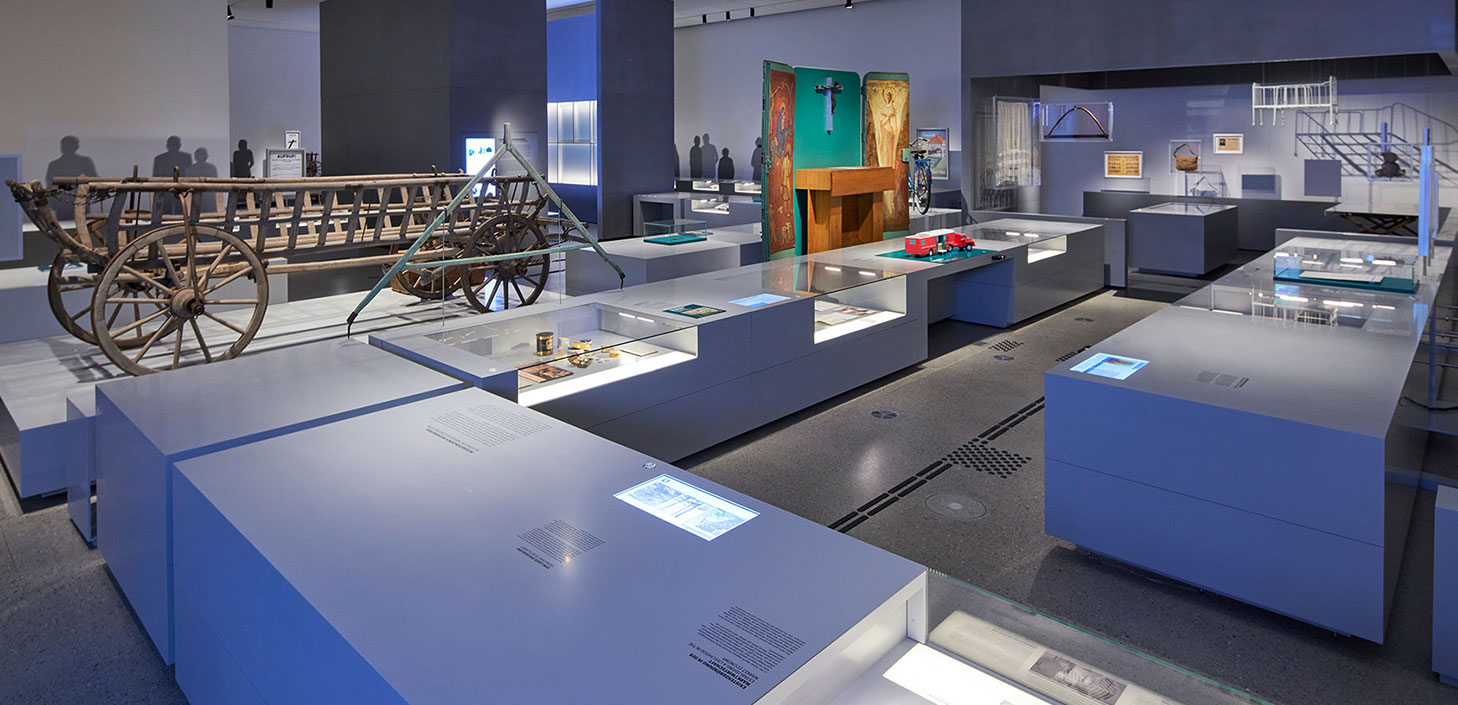
The schedule leading up to the opening was very tight. Within six months, we manufactured and assembled display furniture made out of almost 900 square metres of solid surface material and over 1,000 square metres of chipboard. There were a number of overlaps with other trades that we had to keep a close eye on throughout the process: the lighting, the media being installed, the print material used, the glass being fitted, and so on.
Numbers & Facts
-
Location
Berlin
-
Design/concept
ATELIER BRÜCKNER GmbH
-
Materials
Avonite® (solid surface)
-
Colour
Dove Grey
-
Photos
ATELIER BRÜCKNER / Michael Jungblut
What steps had to be taken to achieve this?
First of all, the very heavy, large-format solid surface panels were designed in a way which meant that, despite their weight, they could still be transported and then joined together with precision. The huge components had to be broken down into modules for easier assembly and precisely aligned in terms of structure and shape.
Then the solid individual parts were processed using CNC machining, and all of the functional components were pre-integrated. A carefully planned assembly process rounded off the project.